

Rabbits are among the most familiar small mammals in the world. Their soft fur, gentle nature, and playful behavior make them popular as pets, and they are also important in wild ecosystems. But many people don’t realize how many different species of rabbit exist, or where they come from. Understanding the types and their origins helps not only animal lovers, but also those interested in wildlife, farming, and conservation. This article explores rabbit species, their origins, key differences, and practical facts, making it easy for beginners to learn and answer common questions.
What Is A Rabbit? Basic Facts
Rabbits belong to the family Leporidae. There are over 30 recognized species, divided between the genera Oryctolagus, Sylvilagus, and others. Rabbits are often confused with hares, but they are different animals. Rabbits are smaller, have shorter ears and legs, and usually live in burrows.
Some basic rabbit facts:
- Average size: 2–6 pounds (0.9–2.7 kg), but some breeds are much larger.
- Lifespan: Wild rabbits live 1–3 years; pet rabbits can reach 8–12 years.
- Diet: Mainly grass, leaves, and vegetables.
- Habitat: Meadows, forests, grasslands, deserts, and urban gardens.
Main Species Of Rabbit And Their Origin
Different species of rabbit have unique histories and habitats. Let’s look at some of the most important and well-known species.
European Rabbit (oryctolagus Cuniculus)
The European rabbit is the ancestor of most domestic rabbits. It is native to southwest Europe and northwest Africa. In the wild, it lives in burrows called warrens.
Key facts:
- Introduced to Australia, New Zealand, and the Americas by humans.
- Main source of rabbit breeds for pets and farming.
- Wild European rabbits are smaller than most domestic breeds.
Cottontail Rabbits (genus Sylvilagus)
Cottontail rabbits are native to the Americas. There are about 16 species in this group, famous for their white, fluffy tail.
Some common cottontail species:
- Eastern cottontail (Sylvilagus floridanus): Found across eastern and central US, Mexico, and parts of Canada.
- Desert cottontail (Sylvilagus audubonii): Lives in arid regions of the western US and Mexico.
- Mountain cottontail (Sylvilagus nuttallii): Found in mountainous areas of the western US.
Cottontails do not dig deep burrows. They make shallow nests in grass or bushes.
Amami Rabbit (pentalagus Furnessi)
The Amami rabbit is a rare species found only on two islands in southern Japan (Amami Ōshima and Tokunoshima). It is sometimes called a living fossil because it is the only survivor of an ancient rabbit family.
Unique traits:
- Short, rounded ears.
- Black-brown fur.
- No close relatives anywhere else.
Volcano Rabbit (romerolagus Diazi)
The volcano rabbit is one of the smallest rabbits in the world. It lives only in the mountains near Mexico City.
Key points:
- Endangered due to habitat loss.
- Lives in high grass near volcanoes.
- Known locally as “teporingo.”
Riverine Rabbit (bunolagus Monticularis)
The riverine rabbit is native to South Africa and is one of the world’s rarest rabbits.
Important details:
- Found in river valleys and semi-desert regions.
- Critically endangered, with fewer than 500 adults left in the wild.
- Unique black stripe from mouth to chest.
Wild Vs. Domestic Rabbits
Most domestic rabbits come from the European rabbit. Selective breeding has created dozens of breeds with different colors, sizes, and fur types.
Wild rabbits:
- Usually smaller and leaner.
- More alert and faster.
- Less tame, harder to keep as pets.
Domestic rabbits:
- Bred for temperament, appearance, and meat/fur production.
- Can live indoors or outdoors.
- Need more care, but are friendlier.
Credit: www.britannica.com
Comparison Of Popular Rabbit Species
To help beginners, here’s a simple comparison of four well-known rabbit species:
| Species | Origin | Size | Habitat | Status |
|---|---|---|---|---|
| European Rabbit | Europe, NW Africa | Medium | Grasslands, burrows | Common |
| Eastern Cottontail | North America | Small | Meadows, bushes | Abundant |
| Amami Rabbit | Japan (islands) | Medium | Forests | Endangered |
| Volcano Rabbit | Mexico | Very small | Mountain grass | Endangered |
Origin And Evolution Of Rabbit Species
Rabbits have a long history. Fossils show they have existed for millions of years. Most rabbit species evolved separately in different parts of the world.
- European rabbits spread across Europe and were later taken to other continents by humans.
- Cottontail rabbits evolved in North and South America, adapting to forests, grasslands, and deserts.
- Unique species like the Amami rabbit and volcano rabbit survived only in isolated places.
Domestication happened in Europe, mainly in France and Spain, starting around the Middle Ages. Rabbits were bred for food, fur, and as pets.
Genetic Differences
Each rabbit species has unique genetics. Domestic breeds are all from the European rabbit, which makes them more similar to each other than to wild species like cottontails.
- Wild rabbits have more genetic variety, helping them survive diseases and changing environments.
- Domestic rabbits are sometimes more prone to health issues due to selective breeding.
Rabbit Breeds Vs. Species: Key Differences
Many people confuse rabbit breeds and rabbit species. Here’s a simple explanation:
- Species: Natural group, can’t always breed with other species. Example: European rabbit, cottontail rabbit.
- Breeds: Created by humans for looks or uses. Example: Dutch rabbit, Rex rabbit, Flemish Giant.
A breed is like a type within a species. All breeds of domestic rabbits are the same species (European rabbit).
Table Of Domestic Rabbit Breeds (examples)
Here’s a quick look at popular domestic rabbit breeds, all descended from the European rabbit:
| Breed | Origin | Size | Main Use |
|---|---|---|---|
| Netherland Dwarf | Netherlands | Very small | Pet |
| Flemish Giant | Belgium | Very large | Meat, show |
| Rex | France | Medium | Fur, pet |
| Angora | Turkey | Medium | Wool |
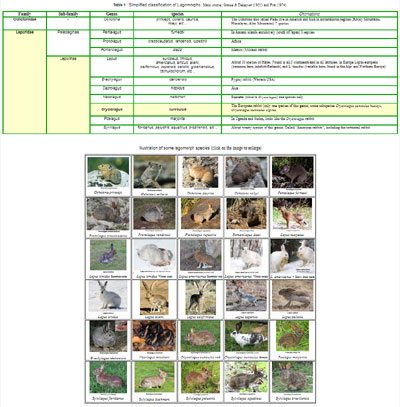
Credit: www.cuniculture.info
Rabbit Habitats And Adaptation
Different rabbit species are adapted to different environments. Some live in cold mountains, others in hot deserts or forests. Their bodies and habits match their surroundings.
Examples:
- Desert cottontail: Light fur, survives with little water, hides under bushes.
- Volcano rabbit: Small body, thick fur, lives in cool mountain grass.
- European rabbit: Digs deep burrows to escape predators and weather.
Practical tip: If you plan to keep a rabbit, choose a breed that matches your climate and living space. Some breeds need more warmth or room to dig.
Common Mistakes Beginners Make
- Mixing up breeds and species: Remember, breeds are types within one species (domestic rabbit), species are wild groups.
- Choosing wild rabbits as pets: Wild rabbits are not tame and often do poorly in homes.
- Ignoring habitat needs: Rabbits need the right space, temperature, and diet for their species or breed.
- Overfeeding: Domestic rabbits can get overweight easily; wild rabbits rarely do.
- Not understanding origin: Where a rabbit comes from affects its behavior and care needs.

Credit: en.wikipedia.org
Conservation Of Rare Rabbit Species
Some rabbit species are at risk of extinction. Reasons include habitat loss, hunting, and disease.
- The riverine rabbit and volcano rabbit are critically endangered.
- Conservation groups protect their habitats and study their populations.
- Pet rabbits are not endangered, but wild populations need careful management.
Non-obvious insight: Many rare rabbits are only found in small areas; even tiny habitat changes can threaten them.
How Rabbits Spread Worldwide
Rabbits have been introduced to many countries by humans. For example, the European rabbit was brought to Australia in the 1800s for hunting. They multiplied quickly and caused environmental problems.
- In Australia, rabbits destroyed crops and native plants.
- In New Zealand, similar problems happened.
- In the Americas, cottontails are native, so there are fewer issues.
Key fact: The ability of rabbits to adapt and reproduce quickly makes them one of the most successful mammals.
Table: Rabbit Population By Region
Here’s a look at rabbit populations in different areas:
| Region | Main Species | Estimated Population | Status |
|---|---|---|---|
| Europe | European rabbit | 100 million+ | Stable |
| North America | Cottontail rabbits | 300 million+ | Abundant |
| Australia | European rabbit (introduced) | 200 million+ | Pest |
| Japan | Amami rabbit | <5,000 | Endangered |
Practical Tips For Identifying Rabbit Species
- Look at ear length: Hares have longer ears, rabbits shorter.
- Check tail color: Cottontails have white tails.
- Observe size and fur: Giant breeds are only found as pets; wild rabbits are smaller.
- Ask about origin: Where was the rabbit found or bred?
Non-obvious insight: Some wild rabbits can look like domestic breeds, but their behavior and genetics are different.
Frequently Asked Questions
What Is The Difference Between A Rabbit And A Hare?
Rabbits are smaller, have shorter ears and legs, and live in burrows. Hares are larger, have longer ears, and live above ground. Hares are not kept as pets.
Which Rabbit Species Is Most Common As A Pet?
The European rabbit is the ancestor of all domestic breeds. Most pet rabbits are breeds of this species, not wild types.
Are Wild Rabbits Good Pets?
Wild rabbits are not recommended as pets. They are not tame, can be stressed easily, and may carry diseases. Domestic rabbits are bred to be friendlier and healthier.
How Can I Help Protect Endangered Rabbit Species?
Support conservation groups, avoid buying wild rabbits, and learn about habitat protection. Information from sites like Wikipedia can help you understand the challenges.
Why Do Some Rabbits Become Pests In Certain Countries?
Rabbits reproduce quickly and can damage crops. In places like Australia, introduced rabbits had no natural predators and multiplied fast, causing environmental problems.
Rabbits are fascinating animals, with a rich history and great diversity. Understanding their species and origins helps us care for them better, protect wild populations, and answer questions about their behavior and needs. Whether you are a beginner or already interested in rabbits, learning about their origin and types gives you a deeper appreciation for these unique mammals.